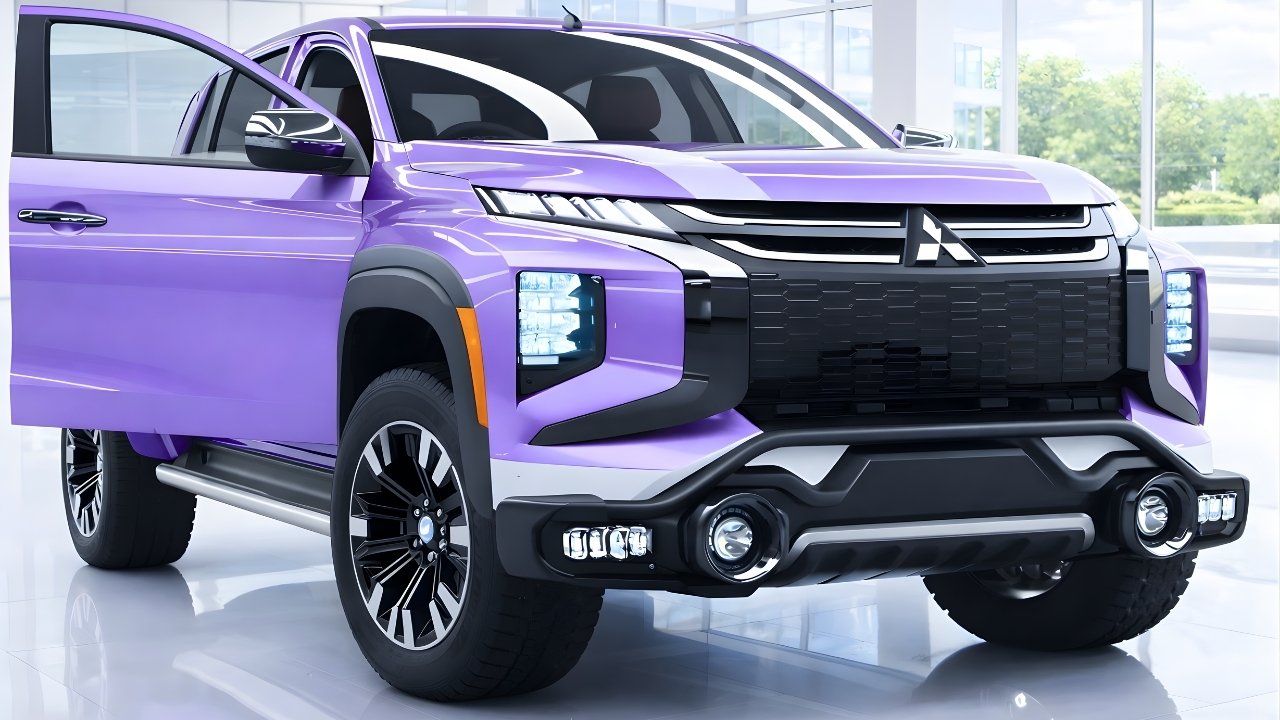
The 2026 Mitsubishi L200 arrives at a moment when global pickup buyers are demanding far more than basic durability. Across emerging and developed markets alike, lifestyle driven customers are looking for refinement, technology, and comfort without sacrificing strength. This next generation L200 reflects that shift, positioning itself as a premium mobility tool that blends work capability with long distance comfort and a more polished design philosophy.
While Mitsubishi has confirmed the new generation L200 for multiple international markets, several details remain subject to final homologation and regional strategy. Where official data is not yet published, expectations are based on industry trends, previous L200 evolutions, and supplier insights rather than fixed specifications.
Exterior Design And Coachbuilt Influence
The 2026 L200 adopts a more architectural exterior, moving away from purely utilitarian styling toward a confident, sculpted form. The front fascia is expected to feature a wider stance, layered lighting elements, and a more upright grille that reinforces visual strength while maintaining aerodynamic efficiency. Body surfacing appears more deliberate and refined, reflecting Mitsubishi’s intention to elevate perceived quality across global markets.

Design elements in higher trims are expected to include premium paint finishes, larger alloy wheels, and subtle chrome or satin accents depending on market preferences. These details are intended to appeal to buyers who use their pickup as a daily vehicle and not only as a work tool. While not a coachbuilt vehicle in the traditional luxury sense, the L200’s design philosophy borrows from that world by emphasizing proportion, material harmony, and visual longevity.
Cabin Experience And Comfort Focus
Inside, the 2026 Mitsubishi L200 is widely expected to deliver a major step forward in cabin quality. Softer touch materials, improved seat cushioning, and better sound insulation aim to make long journeys noticeably more comfortable. Dual cab configurations are designed to comfortably seat five adults, with rear legroom and seatback angles optimized for extended travel rather than short utility trips.

Luxury oriented trims are likely to offer leather upholstery, power adjustable front seats, dual zone climate control, and ambient lighting. These features, while still dependent on regional specifications, align with the growing demand for premium interiors in midsize pickups. Mitsubishi’s goal appears to be creating a cabin that feels closer to a large SUV while retaining the practicality of an open cargo bed.
Powertrain Strategy And Capability Expectations
Mitsubishi has traditionally relied on diesel power for the L200, and this approach is expected to continue in 2026. Industry estimates point toward a 2.4 liter turbocharged diesel engine offered in multiple power outputs, likely ranging between 180 and 205 horsepower depending on tune and emissions standards. Torque figures are expected to remain a strong point, supporting towing and off road use.

Transmission options are likely to include both six speed manual and automatic gearboxes, paired with rear wheel drive or Mitsubishi’s advanced four wheel drive system. Electrified options such as mild hybrid assistance are considered possible in select markets, though full confirmation is pending. Any electrification would focus on efficiency and smoother torque delivery rather than all electric operation.
Technology And Safety Integration
The 2026 L200 is positioned to reflect the broader digital transformation happening across Mitsubishi’s lineup. A larger central touchscreen with wireless smartphone integration is expected, alongside a fully digital instrument cluster in higher trims. Voice control, over the air software readiness, and connected vehicle services are increasingly standard expectations in this segment.

Safety technology is also expected to advance, with driver assistance systems such as adaptive cruise control, lane support, blind spot monitoring, and automated emergency braking likely available depending on trim level. These systems are designed to support fatigue free long distance travel and safer urban driving, aligning the L200 with global safety expectations for premium vehicles.
Market Positioning And Ownership Profile
The 2026 Mitsubishi L200 targets a diverse global buyer profile that includes business owners, outdoor lifestyle users, and families seeking a single vehicle solution. It is designed to serve as both a professional tool during the week and a comfortable travel companion on weekends. This dual identity is central to its appeal in regions where pickups are increasingly replacing traditional SUVs.

Estimated pricing is expected to vary widely by market, with entry level variants likely positioned competitively against established rivals, while premium trims could approach the cost of midsize SUVs. In many regions, industry estimates place the L200 within a mid range premium bracket rather than a budget category. This strategy reflects Mitsubishi’s effort to balance value, durability, and modern luxury in a rapidly evolving global pickup landscape.
Future Outlook And Global Relevance
Looking ahead, the 2026 L200 represents Mitsubishi’s commitment to keeping internal combustion pickups relevant in a future shaped by electrification and digital mobility. By focusing on efficiency improvements, comfort, and adaptable technology, the L200 aims to remain attractive even as regulatory and consumer expectations continue to shift.
For global markets where infrastructure, terrain, and usage demands vary dramatically, the L200’s flexibility remains its greatest strength. It is not positioned as an experimental concept but as a refined evolution of a proven formula. In doing so, the 2026 Mitsubishi L200 reinforces its role as a dependable yet increasingly sophisticated vehicle for modern global travel and work lifestyles.
Other
Beyond specifications and features, the 2026 L200 reflects a broader trend toward premium utility vehicles that blur the line between commercial and personal transportation. Its design, comfort, and technology choices indicate a clear understanding of how pickups are used in real life across continents.
As official market launches approach, final specifications will clarify regional differences and trim strategies. What remains clear is that the new L200 is engineered to feel relevant not just today, but well into the next decade of global mobility.