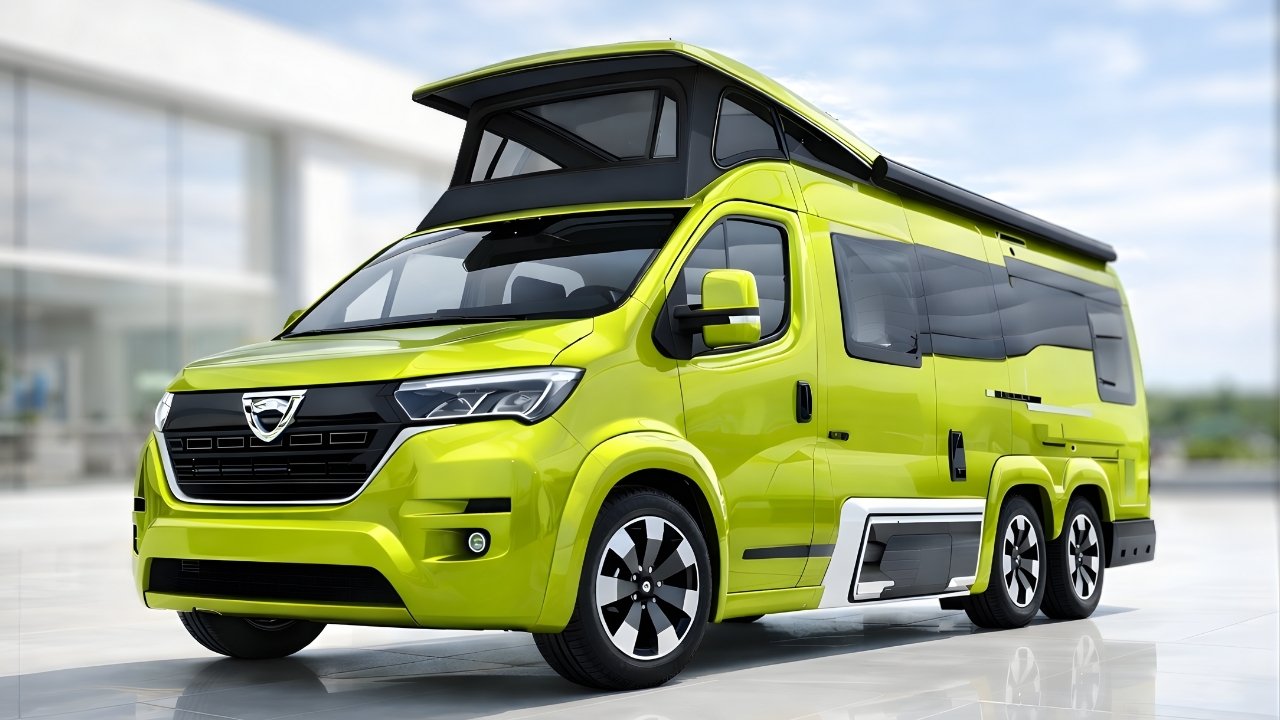
The 2026 Dacia Dokker Camper is positioned as a compact camper concept aimed at redefining entry level luxury mobility for a global audience. Based on the familiar Dokker footprint, this model is widely understood to be a coachbuilt or factory supported conversion rather than a fully bespoke motorhome. Much of its positioning is rooted in concept level thinking and industry expectations, as official production confirmation remains limited in many markets.
What makes the Dokker Camper compelling is its balance between everyday usability and leisure focused design. It targets buyers who want a vehicle that can function as a city friendly van during the week and a refined travel companion on weekends. This dual purpose philosophy aligns well with evolving travel habits, particularly among younger professionals and minimalist explorers.
Exterior Design and Coachbuilt Philosophy
The exterior design is expected to retain the Dokker’s upright proportions while introducing camper specific enhancements such as a raised roof option, integrated roof rails, and discreet camping graphics. These elements are likely to be functional rather than decorative, supporting accessories like roof tents or solar panels depending on configuration. Any visual upgrades should remain subtle, reinforcing Dacia’s practical design language.

Coachbuilt elements are anticipated to focus on durability and weight efficiency rather than extravagance. Lightweight composite panels, reinforced side openings, and improved weather sealing are realistic expectations. While panoramic windows and pop up roofs are often discussed in industry circles, these features should be considered optional or market dependent rather than guaranteed inclusions.
Interior Layout and Space Utilization
Inside, the 2026 Dokker Camper is expected to prioritize intelligent space management over sheer luxury. A modular interior layout is the most realistic approach, with foldable seating that converts into a sleeping area suitable for two adults. Estimated sleeping length would be around 1.9 meters, aligning with the vehicle’s compact dimensions.

Materials are likely to focus on durability with an upscale finish, including soft touch panels, washable fabrics, and wood effect surfaces. Storage is expected to be integrated into the floor, side panels, and rear modules, allowing travelers to carry essentials without clutter. Any kitchenette elements such as a portable stove or compact sink should be viewed as configuration dependent rather than standard equipment.
Powertrain Possibilities and Driving Experience
Powertrain options for the 2026 Dacia Dokker Camper are expected to mirror those of Dacia’s small commercial and passenger vehicles. Petrol and diesel engines in the 1.3 to 1.5 liter range are realistic, with estimated outputs between 95 and 115 horsepower. These figures support relaxed cruising rather than performance oriented driving.

There is also growing industry speculation around a mild hybrid or LPG compatible option, especially for markets with stricter emissions regulations. A fully electric variant is less certain due to range limitations and cost considerations, although future adaptations cannot be ruled out. Driving dynamics are expected to remain car like, emphasizing comfort and predictability over rugged off road capability.
Technology and Comfort Expectations
Technology in the Dokker Camper is expected to align with modern passenger vehicles rather than traditional campers. A central touchscreen infotainment system with smartphone integration is highly likely, along with digital driver displays in higher trims. These features support seamless navigation and connectivity during long journeys.

Comfort enhancements may include upgraded seating with improved lumbar support, enhanced sound insulation, and automatic climate control. Ambient interior lighting and multiple charging points are also realistic expectations. While luxury features such as advanced driver assistance systems may be limited, core safety technologies should meet contemporary global standards.
Dimensions, Practicality, and Daily Usability
In terms of size, the Dokker Camper is expected to measure approximately 4.4 meters in length, making it easy to maneuver in urban environments. This compact footprint is central to its appeal, allowing owners to use it as a primary vehicle rather than a dedicated leisure asset.

Payload capacity is expected to remain practical even with camper fittings installed, supporting light adventure gear and personal luggage. Sliding side doors and a wide rear opening enhance accessibility, while a low loading height improves everyday convenience. These traits position the vehicle as a realistic alternative to larger and more expensive camper vans.
Pricing, Target Buyers, and Market Positioning
Estimated pricing for the 2026 Dacia Dokker Camper is expected to fall between €20,000 and €26,000 depending on configuration and market. This range reflects its positioning as an accessible premium lifestyle vehicle rather than a luxury motorhome. Final pricing will depend heavily on factory support and local taxation structures.
The target buyer includes first time camper owners, urban professionals, and couples seeking flexible travel without long term financial commitment. The Dokker Camper represents a shift toward simplified luxury, where thoughtful design and adaptability matter more than excess. In a future shaped by conscious mobility, it stands as a practical vision of modern travel freedom.