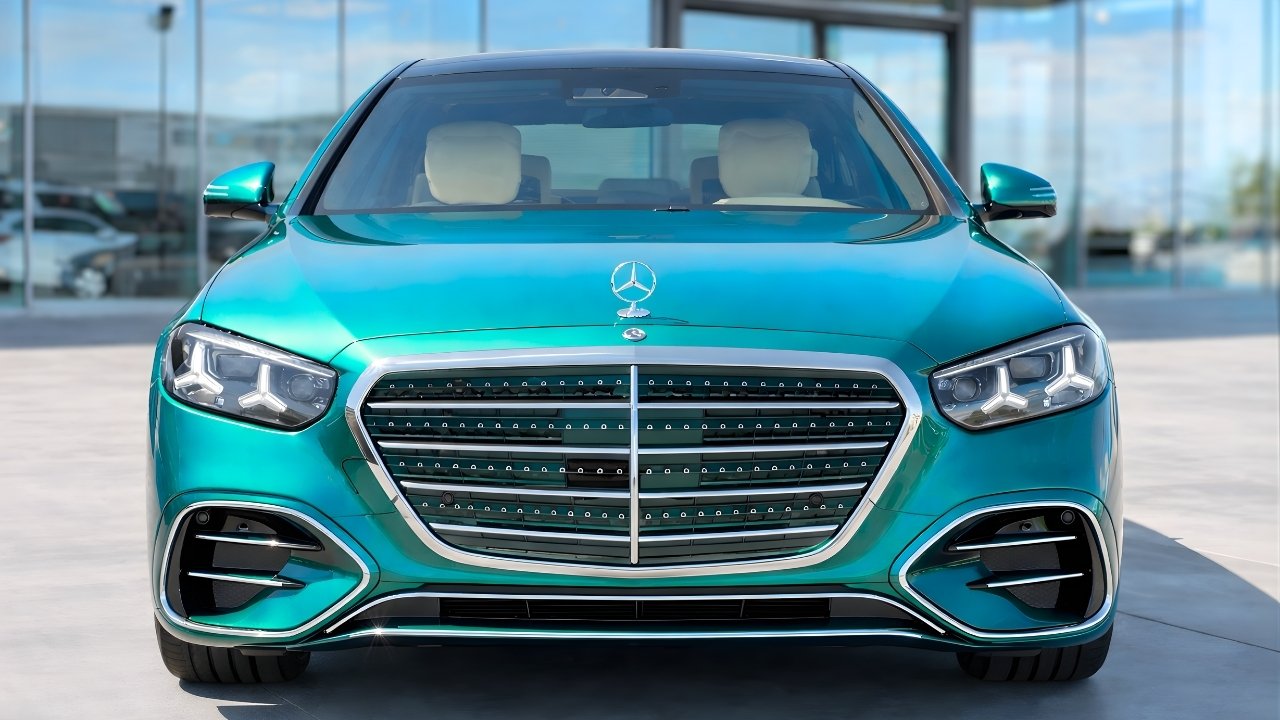
The 2027 facelift of the S Class represents a careful evolution rather than a dramatic reinvention, aligning with the model’s long standing role as a benchmark for luxury mobility. This update is designed to refine the current generation with subtle design adjustments, deeper digital integration, and an expanded focus on comfort driven innovation. The goal is not to surprise, but to reassure buyers who value continuity, craftsmanship, and technical leadership.
While Mercedes has officially positioned this as a mid cycle refresh, industry observers note that the scale of updates feels more substantial than a typical facelift. Some details discussed here are based on early manufacturer previews and informed industry estimates, especially where official specifications vary by market. What remains consistent is the S Class philosophy of anticipating future travel needs before they become mainstream expectations.
Exterior Design and Coachbuilt Influence
Visually, the 2027 S Class facelift maintains its familiar proportions, with an overall length expected to remain close to 5.2 meters for the standard wheelbase and approximately 5.3 meters for long wheelbase versions. Subtle refinements to the front fascia, including a more sculpted grille and revised lighting signatures, give the car a cleaner and more contemporary presence without abandoning its formal elegance.

Designers appear to have drawn inspiration from bespoke and coachbuilt luxury cues, particularly in the way chrome accents, surface finishes, and wheel designs are executed. Optional illuminated detailing and new paint finishes are expected to expand the personalization palette, especially through premium customization programs. These enhancements are intended to appeal to owners who see the S Class as both a personal statement and a mobile lounge.
Interior Craftsmanship and Digital Experience
Inside, the facelift focuses heavily on refining the digital luxury experience. The cabin continues to emphasize horizontal space and calm design, with high resolution displays integrated more seamlessly into the dashboard. Updated infotainment software is expected to offer faster responses, improved voice interaction, and greater personalization, reflecting broader trends in intelligent mobility.

Material quality remains central to the experience, with expanded options for natural leathers, sustainable trims, and handcrafted details. Rear seat comfort receives particular attention, especially in long wheelbase configurations where reclining seats, massage programs, and advanced climate control create a near first class travel environment. These features reinforce the S Class reputation as a preferred choice for chauffeured luxury in global markets.
Powertrain Strategy and Efficiency Focus
Powertrain offerings for the 2027 S Class facelift are expected to vary by region, but the core strategy emphasizes electrified performance. Inline six and V8 engines paired with mild hybrid systems are widely anticipated, delivering smooth power delivery with improved efficiency. Output figures are estimated to range from around 350 horsepower for entry variants to over 500 horsepower for higher performance models, depending on configuration.

Plug in hybrid versions are also expected to play a more prominent role, with electric only driving ranges estimated between 80 and 100 kilometers under ideal conditions. These figures are based on industry expectations rather than final certification data. The focus is on silent urban driving combined with long distance capability, aligning the S Class with evolving emissions standards and urban mobility policies worldwide.
Ride Comfort, Safety, and Autonomous Progress
Ride quality remains a defining attribute of the S Class, and the facelift continues to refine this strength through advanced air suspension and optional active body control systems. Rear axle steering is expected to remain available, improving maneuverability in urban environments while enhancing stability at higher speeds. These technologies work together to deliver a composed and isolated ride experience.

In terms of safety and driver assistance, the 2027 update builds on existing systems with more sophisticated sensor integration and software intelligence. While full autonomous driving remains subject to regulatory approval, the S Class is positioned to offer increasingly automated highway and traffic assist functions where permitted. These developments reflect broader industry progress rather than specific promises tied to a single market.
Pricing, Target Buyers, and Global Appeal
Estimated pricing for the 2027 S Class facelift is expected to begin around USD 120000 in major markets, with high specification long wheelbase and hybrid variants exceeding USD 160000 before local taxes and options. These figures are indicative and may vary significantly by region, especially in markets with import duties or luxury taxes.

The target audience includes business leaders, diplomats, and luxury focused families who prioritize comfort, discretion, and technological confidence. In emerging markets, the S Class continues to serve as a symbol of professional success, while in mature markets it appeals to buyers seeking a refined alternative to high performance or overtly styled luxury vehicles.
Other
Beyond its tangible upgrades, the 2027 S Class facelift reflects a broader shift in how luxury sedans are positioned in an era increasingly dominated by SUVs. Rather than competing on visual dominance, the S Class emphasizes serenity, efficiency, and intelligent design, appealing to buyers who value thoughtful engineering over trends.
As global travel patterns evolve and cities prioritize quieter, cleaner mobility, the S Class continues to adapt without abandoning its core identity. This balance between tradition and forward looking innovation ensures that the flagship sedan remains relevant, not as a relic of the past, but as a carefully crafted vision of premium travel for the years ahead.