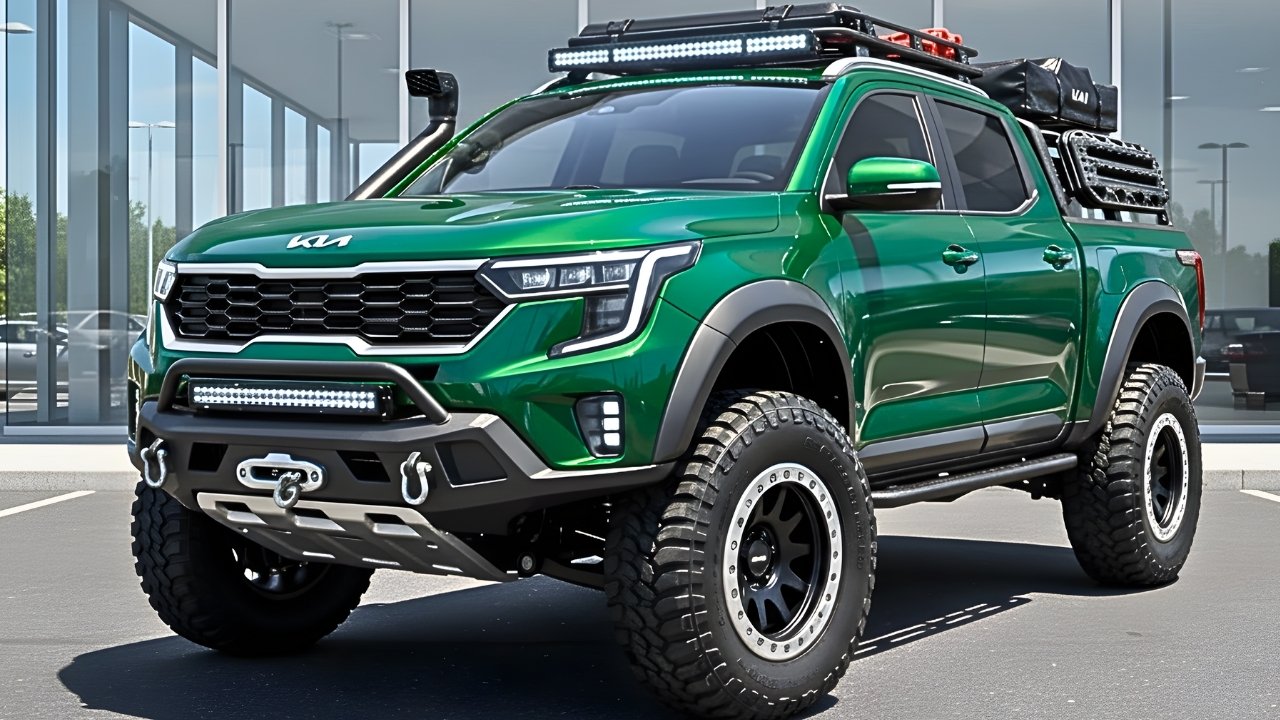
The 2026 Kia Tasman marks a major step for Kia as it enters the global pickup truck segment with a model designed from the ground up for utility, durability, and everyday comfort. Known for its success in passenger cars and SUVs, Kia is expanding its portfolio with a body on frame pickup that targets buyers who need real work capability without giving up modern design and technology. The Tasman is positioned as a mid size pickup, developed to compete in markets where lifestyle trucks and work focused utes continue to grow in popularity.
Named after the Tasman Sea, the truck reflects Kia’s intention to create a vehicle that feels rugged and adventurous while still fitting into daily life. The 2026 model year builds on the original global reveal by refining features, expanding trim strategies, and aligning the pickup with regional expectations. With this model, Kia is clearly signaling that it wants to be taken seriously in a segment long dominated by established players.
Exterior Design and Presence
The exterior design of the 2026 Kia Tasman is bold and functional, moving away from soft crossover styling and embracing a more squared and muscular look. The front fascia features a wide grille, upright stance, and modern lighting elements that give the truck a confident road presence. High ground clearance, flared wheel arches, and strong body lines reinforce the Tasman’s off road focused character without appearing overly aggressive.

From the side and rear, the Tasman balances clean surfaces with practical proportions. The cargo bed is designed for real world use, with durable materials and proportions suitable for both work and recreation. Kia has focused on making the truck look equally appropriate at a construction site or parked outside a city café, a balance that reflects changing buyer expectations in the mid size pickup segment.
Interior and Comfort
Inside, the 2026 Kia Tasman aims to challenge the idea that pickup trucks must feel basic or utilitarian. The cabin design follows Kia’s modern interior philosophy, with a clean dashboard layout, wide digital displays, and thoughtful storage solutions. Materials and finishes vary by trim level, ranging from hard wearing surfaces in work focused versions to more refined textures in lifestyle oriented trims.

Seating comfort is a key priority, especially for long distance driving and daily commuting. The Tasman offers generous headroom and legroom, particularly in double cab configurations, making it suitable for families as well as work crews. Noise insulation and ride comfort have also been tuned to ensure the vehicle feels composed on highways, not just capable off road.
Powertrain Options
The 2026 Kia Tasman is expected to offer a choice of petrol and diesel engines depending on the market. A turbocharged petrol engine provides strong on road performance, appealing to buyers who prioritize smooth acceleration and everyday drivability. The diesel option, on the other hand, focuses on torque delivery, making it better suited for towing, hauling, and off road use.

Transmission options include manual and automatic gearboxes, paired with rear wheel drive or four wheel drive systems. Kia has emphasized reliability and efficiency in these powertrains, understanding that pickup buyers often cover long distances and operate in demanding conditions. The goal is not just peak performance, but consistent capability over years of ownership.
Capability and Utility
True to its pickup identity, the 2026 Kia Tasman is engineered for serious utility. Built on a ladder frame chassis, it offers the structural strength needed for heavy loads and rough terrain. Payload capacity and towing figures are competitive within the mid size segment, allowing the Tasman to handle trailers, equipment, and recreational gear with confidence.

Off road capability is enhanced through features such as selectable drive modes, locking differentials on certain trims, and robust suspension tuning. Whether used on unpaved rural roads, construction sites, or weekend trails, the Tasman is designed to remain predictable and durable. Kia’s focus is on providing dependable performance rather than extreme specialization.
Technology and Safety
Technology plays a central role in making the 2026 Kia Tasman feel modern and user friendly. The infotainment system supports large touchscreens, smartphone connectivity, and intuitive menus, ensuring drivers can easily access navigation, media, and vehicle settings. Physical controls are retained for key functions, which is particularly useful in off road or work environments.

Safety is another strong focus, with the Tasman offering a suite of driver assistance features depending on trim and market. These may include adaptive cruise control, lane keeping assistance, blind spot monitoring, and surround view cameras. By integrating these systems into a pickup platform, Kia aims to appeal to buyers who expect the same safety standards found in modern SUVs.
Market Positioning and Competition
In the global market, the 2026 Kia Tasman enters a highly competitive segment dominated by long established models. Kia’s strategy is to differentiate through value, design, and technology rather than attempting to outmuscle rivals on extreme specifications alone. The Tasman is positioned as a versatile all rounder that can serve as both a work tool and a lifestyle vehicle.
For markets such as Australia, Southeast Asia, and potentially India, the Tasman represents an alternative to traditional pickups that often emphasize toughness over comfort. By offering a more balanced package, Kia is targeting buyers who want one vehicle to cover professional, family, and recreational needs without compromise.
Other
Beyond specifications and features, the 2026 Kia Tasman is important because of what it represents for the brand. It shows Kia’s willingness to expand into new segments and adapt its design and engineering philosophy to different types of customers. The development of a dedicated pickup platform reflects long term commitment rather than a short term experiment.
As the model evolves, future updates could include electrified variants, region specific tuning, and expanded accessory options. The Tasman sets the foundation for Kia’s presence in the pickup world, and its success will likely influence how the brand approaches utility vehicles in the years ahead.