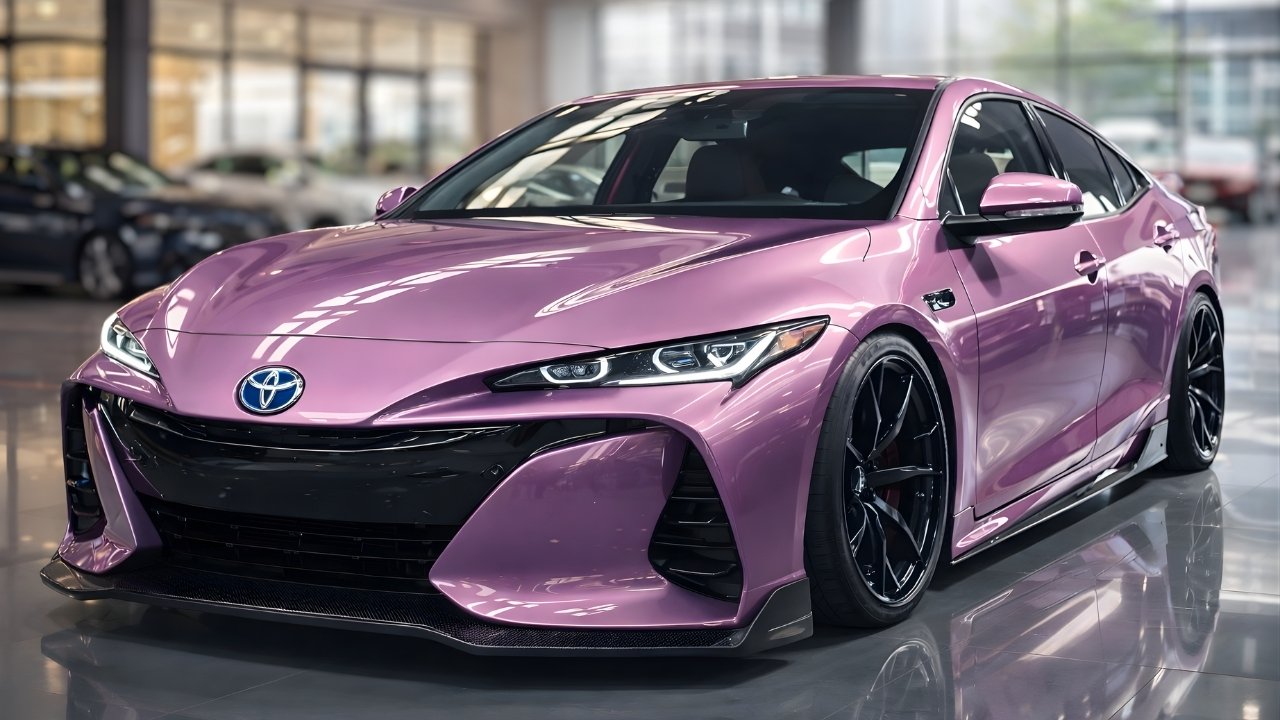
The 2026 Toyota Prius represents an important evolution of one of the world’s most recognized hybrid nameplates. Long associated with efficiency and environmental responsibility, the latest Prius shifts its focus toward refined design, premium comfort, and intelligent mobility while retaining its efficiency-first philosophy. This new generation reflects how hybrid vehicles are no longer niche products but central to modern automotive lifestyles across global markets.
Toyota positions the 2026 Prius as a bridge between mass market practicality and entry-level luxury mobility. While official global specifications may vary by region, the core concept remains consistent: a stylish, technologically advanced hybrid that appeals to urban professionals, environmentally conscious families, and buyers seeking long-term value with a premium edge.
Exterior Design and Aerodynamic Identity
The exterior design of the 2026 Prius builds on the dramatic redesign introduced in the previous generation, featuring a low-slung silhouette, coupe-like roofline, and sharply sculpted body panels. This design direction emphasizes aerodynamic efficiency while delivering a more confident and upscale road presence, moving further away from the purely functional styling of earlier models.

Details such as slim LED lighting, flush surfaces, and carefully integrated wheels contribute to reduced drag and a cleaner aesthetic. While some elements may differ by market or trim level, the overall look positions the Prius as a modern urban mobility statement rather than just an economy-focused hatchback.
Interior Ambience and Comfort Focus
Inside, the 2026 Prius emphasizes a calm, lounge-inspired cabin designed for long-distance comfort and daily usability. The layout prioritizes openness, with a low dashboard, digital instrumentation, and soft-touch materials across key surfaces. Depending on market availability, premium trims are expected to offer leather or advanced synthetic upholstery, heated and ventilated seats, and ambient lighting.

Passenger comfort remains central to the Prius experience, with generous legroom for front occupants and improved rear seating compared to earlier generations. Noise insulation and ride refinement are expected to be enhanced through improved chassis tuning and acoustic materials, supporting a more luxurious driving environment suited to global urban and highway travel.
Powertrain Strategy and Hybrid Efficiency
The 2026 Prius is expected to continue using an advanced hybrid powertrain built around a naturally aspirated gasoline engine paired with one or more electric motors. Industry estimates suggest a combined system output in the range of 190 to 200 horsepower, balancing responsive performance with exceptional efficiency for everyday driving.

A plug-in hybrid variant is also expected in many markets, offering a larger battery and extended electric-only driving capability. Estimated electric range figures are expected to fall between 40 and 50 miles under ideal conditions, allowing many daily commutes to be completed without gasoline while retaining long-distance flexibility.
Driving Experience and Urban Versatility
Despite its efficiency-first mission, the 2026 Prius is engineered to deliver a more engaging and confident driving experience than its predecessors. A lower center of gravity, wider track, and refined suspension tuning contribute to improved handling stability and ride quality, particularly in urban and suburban environments.

Steering response and braking feel are expected to be calibrated for smooth, predictable control rather than outright sportiness. This approach aligns with the Prius’s role as a premium daily mobility solution, prioritizing comfort, efficiency, and ease of use over aggressive performance metrics.
Technology and Intelligent Assistance
Technology plays a central role in the 2026 Prius, reflecting broader trends in connected and semi-autonomous mobility. A large central touchscreen is expected to anchor the infotainment system, supporting wireless smartphone integration, cloud-based navigation, and over-the-air software updates where available.

Advanced driver assistance systems are expected to be standard or widely available, including adaptive cruise control, lane-keeping support, traffic-aware braking, and parking assistance features. These systems are designed to reduce driver fatigue and enhance safety in congested global traffic conditions rather than replace active driver involvement.
Pricing Expectations and Market Positioning
While official pricing will vary significantly by region, the 2026 Prius is estimated to start in the equivalent of 28,000 to 32,000 US dollars for standard hybrid variants in major markets. Plug-in hybrid versions and higher trims with premium features are expected to move closer to the 35,000 to 40,000 dollar range.
This pricing strategy places the Prius between mainstream compact cars and entry-level luxury vehicles. It targets buyers who value long-term efficiency, advanced technology, and understated sophistication without stepping into higher ownership costs associated with traditional luxury brands.
Target Buyers and Future Mobility Role
The 2026 Prius is designed for a global audience that values thoughtful consumption, intelligent design, and future-ready mobility. Its ideal buyers include urban professionals, environmentally conscious families, and technology-oriented drivers seeking a reliable yet aspirational vehicle for daily life.
As cities worldwide evolve toward cleaner transportation and smarter infrastructure, the Prius continues to serve as a practical example of how hybrid technology can support sustainable travel without compromising comfort or style. The 2026 model reinforces its role not just as a car, but as a refined mobility companion aligned with the future of global transportation.