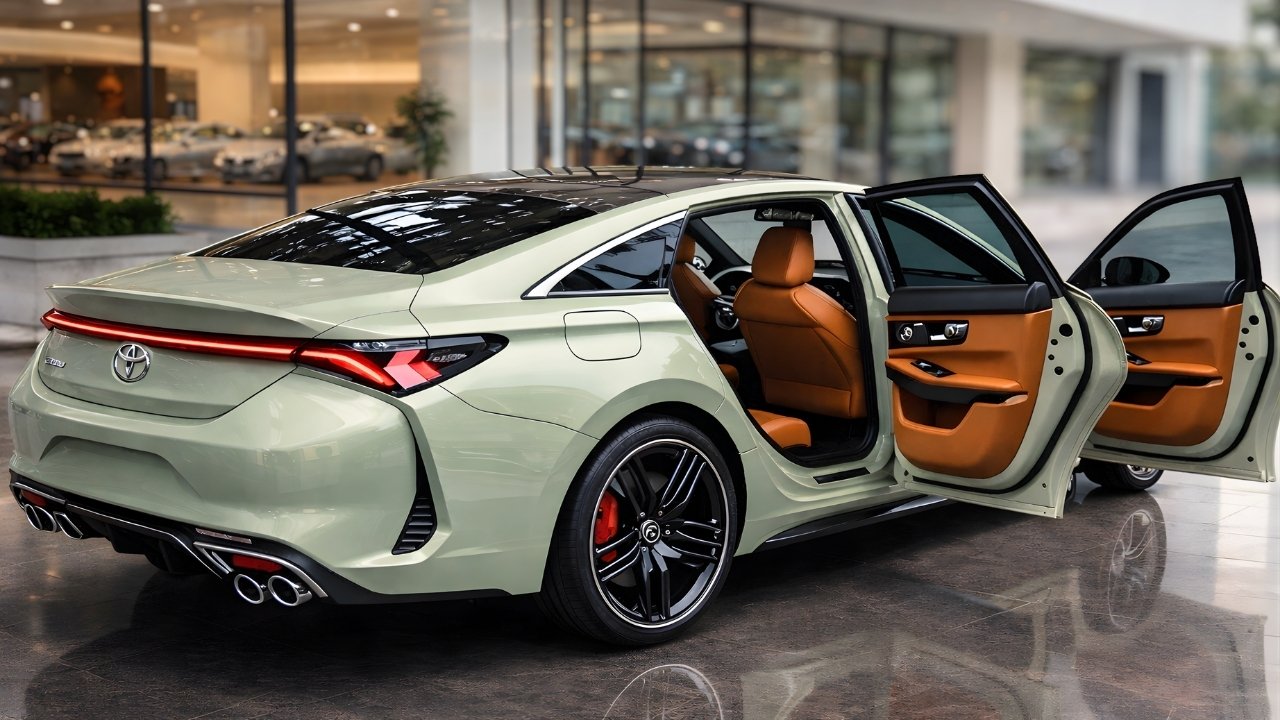
The 2026 Toyota Camry represents a clear evolution of one of the world’s most trusted sedans, repositioned for a future where efficiency, comfort, and quiet luxury matter more than outright performance theatrics. Designed for a global audience, the new Camry blends conservative elegance with forward-looking mobility trends, aiming to satisfy buyers who want refinement without excess. Its appeal lies in subtle progress rather than dramatic reinvention.
Toyota’s approach with the Camry focuses on continuity and confidence, maintaining familiar proportions while refining surfaces and proportions. The result is a sedan that feels contemporary in any market, from North America to Asia and Europe. While official design details vary by region, the overall theme leans toward clean aerodynamics, restrained chrome use, and a balanced stance that communicates maturity and premium intent.
Exterior Design And Proportions
The 2026 Camry adopts a sleeker silhouette with smoother body transitions, emphasizing aerodynamic efficiency and visual calm. Industry observers expect a length close to 4,920 mm and a wheelbase around 2,825 mm, preserving generous cabin space while improving ride stability. The front fascia appears more sculpted, with slimmer lighting elements and a wider visual footprint to elevate road presence.

At the rear, horizontal design elements visually widen the car, reinforcing its executive sedan character. Wheel designs are expected to range from 17 to 19 inches depending on market and trim, with finishes that favor understated elegance over aggressive styling. These refinements help the Camry project a premium image that fits naturally into urban business districts and long-distance highway environments alike.
Hybrid Powertrain Strategy And Efficiency
For 2026, the Camry is positioned primarily as a hybrid-focused model in most global markets, reflecting Toyota’s long-standing commitment to electrified mobility. The core setup is expected to combine a 2.5 liter petrol engine with one or more electric motors, delivering a combined output estimated between 215 and 230 horsepower. This configuration balances responsive acceleration with smooth, quiet operation.

Fuel efficiency remains a major strength, with estimated combined consumption figures ranging from 20 to 23 km per liter in markets using WLTP-style testing, depending on drivetrain configuration. Front-wheel drive is standard in most regions, while select markets may offer all-wheel drive using an additional rear electric motor. These powertrain choices prioritize refinement, reliability, and real-world usability rather than headline performance figures.
Interior Comfort And Luxury Technology
Inside, the 2026 Camry focuses on calm sophistication, using layered materials, soft-touch surfaces, and thoughtful ambient lighting to create a relaxing environment. Expect generous legroom for both rows, supportive seating with ventilation and heating options, and sound insulation tuned for long-distance comfort. The cabin is designed to reduce fatigue, appealing to owners who spend hours commuting or traveling between cities.

Technology plays a central role, with a large central touchscreen likely measuring between 12 and 14 inches, paired with a fully digital instrument cluster. Wireless smartphone integration, cloud-based navigation, and voice-assisted controls are expected across most trims. Premium audio systems, multi-zone climate control, and advanced driver assistance features further elevate the Camry into the modern luxury mobility conversation.
Safety, Assistance, And Intelligent Mobility
The Camry continues Toyota’s emphasis on safety through a comprehensive suite of driver assistance technologies. Features such as adaptive cruise control, lane centering assistance, automated emergency braking, and blind spot monitoring are expected to be standard or widely available. These systems are designed to work unobtrusively, supporting the driver without undermining confidence or engagement.

Looking ahead, the Camry reflects broader industry trends toward semi-autonomous convenience rather than full autonomy. Traffic assist functions, predictive energy management for hybrid systems, and over-the-air software updates are likely to play a growing role. These technologies enhance daily usability while keeping the driving experience intuitive and reassuring for a broad range of users.
Pricing, Positioning, And Target Buyers
Estimated pricing for the 2026 Toyota Camry varies by region, with expected starting prices around USD 30,000 in the United States and equivalent positioning in other markets. In countries like India, pricing is projected to remain in the premium sedan category, potentially ranging between INR 47 lakh and INR 50 lakh depending on trim and taxes. These figures reflect its hybrid-only positioning and enhanced equipment levels.

The target buyer is a professional or family-oriented customer seeking dependable luxury with modern values. The Camry appeals to those who prioritize comfort, efficiency, and long-term ownership satisfaction over flashier alternatives. As mobility trends shift toward responsible luxury, the 2026 Camry stands as a refined expression of how traditional sedans can remain relevant in a changing global automotive landscape.
A Sedan Shaped By The Future Of Travel
The 2026 Camry is not positioned as a disruptive concept car, but as a thoughtful response to how people will travel in the coming decade. Its emphasis on hybrid efficiency, quiet comfort, and intelligent assistance reflects changing expectations around personal mobility. The car is designed to fit seamlessly into evolving urban environments while remaining capable of long-distance touring.
By focusing on balance rather than extremes, Toyota ensures the Camry continues to serve a diverse global audience. It represents a future where luxury is defined by ease, reliability, and environmental awareness. In that context, the 2026 Toyota Camry stands as a mature, confident sedan shaped by the realities of modern travel and the expectations of discerning drivers worldwide.