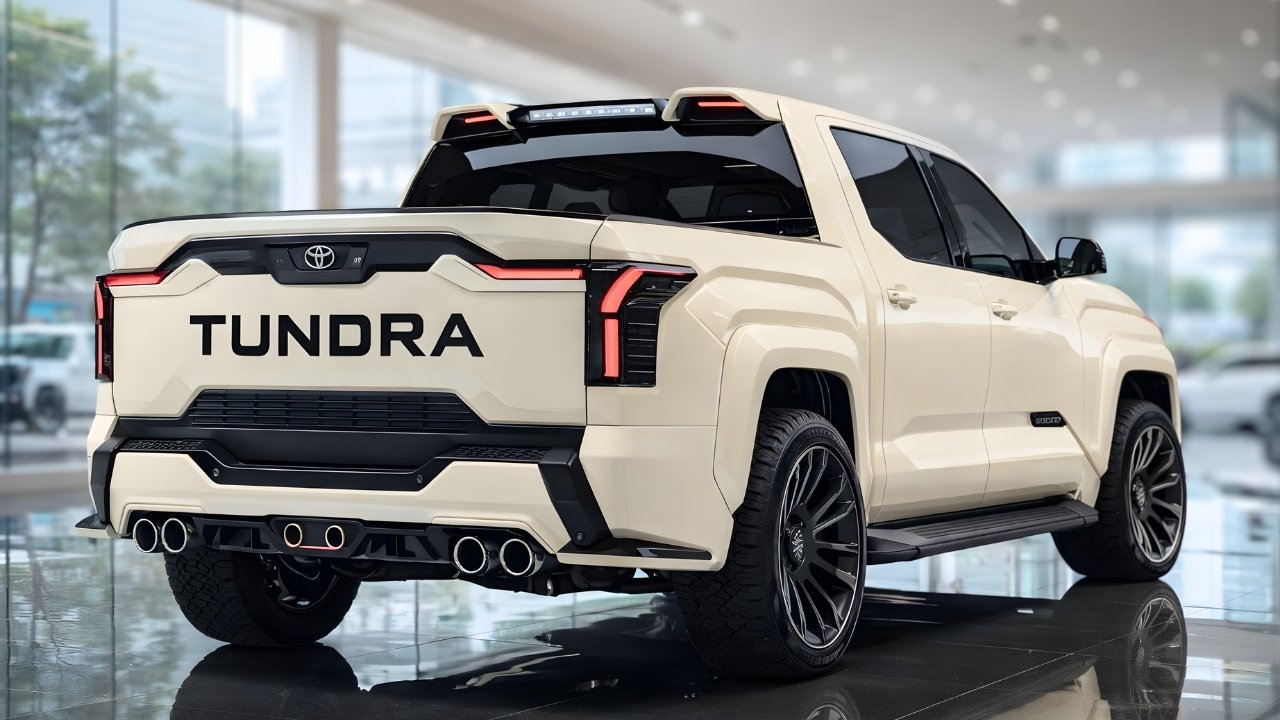
The 2026 Toyota Tundra represents a thoughtful evolution of the modern pickup, blending traditional strength with a growing emphasis on refinement and global appeal. Rather than chasing radical visual change, the latest iteration is expected to focus on proportion, surface quality, and material execution. The result is a truck that feels equally comfortable outside a luxury resort as it does at a construction site, reflecting changing expectations of premium utility vehicles worldwide.
Design updates for 2026 are widely expected to be evolutionary rather than revolutionary. Industry observers anticipate subtle revisions to lighting signatures, grille detailing, and aerodynamic surfacing, while retaining the bold stance that defines the current generation. Where official confirmation is limited, these changes are best understood as design refinements aimed at extending the model’s lifecycle while aligning it with Toyota’s broader premium design language.
Dimensions And Road Presence With Purpose
The Toyota Tundra 2026 is expected to retain its commanding full size proportions, which play a central role in its visual authority and interior comfort. Current estimates suggest an overall length approaching 5.9 meters, a wide track for stability, and a tall profile that reinforces its road dominance. These dimensions are not speculative reinvention but a continuation of a proven platform optimized for strength and versatility.

From an ownership perspective, these proportions translate into real world benefits. A wide cabin allows generous shoulder room for all occupants, while the long wheelbase contributes to improved ride comfort on highways. For global buyers, especially in regions where large pickups symbolize success and mobility freedom, the Tundra’s scale communicates capability without compromising its increasingly polished on road manners.
Powertrain Strategy And Electrified Expectations
Under the hood, the 2026 Tundra is expected to continue with turbocharged V6 powertrains, replacing the traditional V8 approach with modern efficiency and torque delivery. Industry estimates suggest outputs ranging from approximately 350 horsepower for standard variants to over 430 horsepower for hybrid assisted configurations. These figures align with existing technology rather than unconfirmed breakthroughs.

Hybrid powertrains are a key part of Toyota’s future strategy, and the Tundra is positioned as a flagship example of performance oriented electrification. While full electric range figures are not applicable to hybrid versions, electric assistance is expected to improve low speed torque, towing confidence, and fuel efficiency. Any speculation about plug in or fully electric variants remains unconfirmed at this stage and should be viewed as long term potential rather than imminent reality.
Interior Craftsmanship And Digital Comfort
Inside the cabin, the Toyota Tundra 2026 is expected to lean further into luxury territory. Large digital displays, estimated to measure up to 14 inches, are likely to anchor the dashboard, complemented by high resolution driver information screens. Materials such as perforated leather, open pore wood accents, and brushed metal finishes are expected on higher trims, reinforcing a premium atmosphere.

Comfort features are anticipated to reflect the expectations of luxury mobility rather than purely utilitarian design. Ventilated and massaging front seats, multi zone climate control, panoramic roof options, and advanced sound systems are all realistic inclusions based on current market positioning. These features aim to make long distance travel effortless, aligning the Tundra with executive SUVs in terms of cabin experience.
Technology, Safety, And Assisted Driving
Technology in the 2026 Tundra is expected to focus on seamless integration rather than novelty. Advanced driver assistance systems such as adaptive cruise control, lane centering, and automated emergency braking are likely to be standard or widely available. These systems are designed to reduce fatigue during long journeys rather than promise autonomous driving, which remains an area of ongoing development.

Connectivity is another key pillar, with wireless smartphone integration, cloud based navigation, and over the air software updates expected to be part of the ownership experience. These features reflect broader industry trends toward vehicles that evolve digitally over time. Where details remain estimates, they are grounded in Toyota’s established approach to reliability and user friendly technology rather than speculative innovation.
Market Positioning And Global Buyer Appeal
Pricing for the Toyota Tundra 2026 is expected to reflect its premium positioning, with estimated starting prices around 42,000 US dollars and extending beyond 70,000 US dollars for fully equipped luxury and hybrid variants. These figures are indicative rather than confirmed, based on current generation pricing and market inflation trends.

The target buyer is no longer limited to traditional pickup customers. The 2026 Tundra is positioned for entrepreneurs, luxury lifestyle consumers, and global buyers who value presence, comfort, and long distance capability. In an era where mobility is increasingly about experience rather than necessity, the Tundra stands as a refined expression of freedom, craftsmanship, and modern utility tailored for a global audience.